

In modern furniture manufacturing, efficiency is no longer defined by how fast a single machine works—but by how smoothly materials move across the entire production line. This is where an automatic conveyor system becomes a critical component.
For factories aiming to reduce labor costs, improve workflow stability, and scale production capacity, investing in an automated solution is no longer optional. As a leading automation solution provider, Fortran Machinery helps manufacturers upgrade traditional operations into intelligent, high-efficiency production systems.
What is an Automatic Conveyor System?
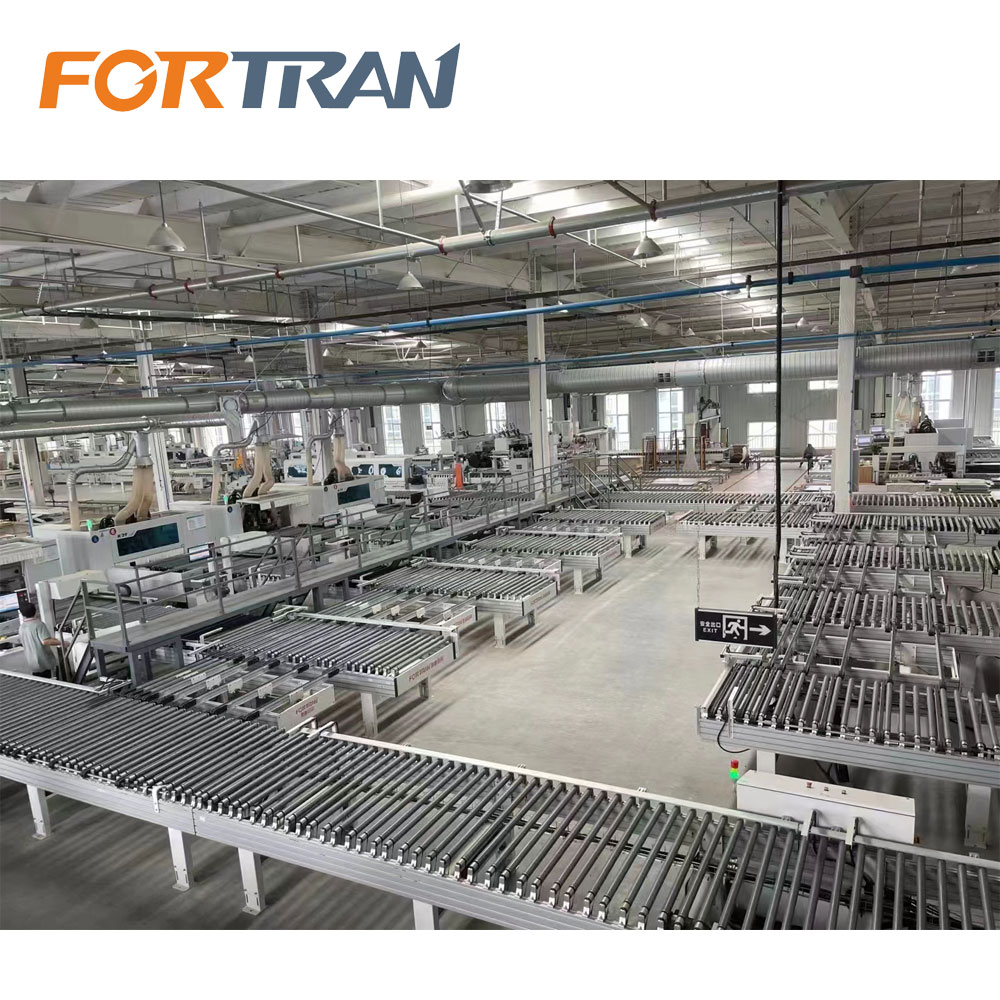
An automatic conveyor system is a material handling solution designed to transport panels, components, and finished products between different stages of a furniture production line without manual intervention.
Instead of relying on workers to carry or move materials, the system uses conveyors, rollers, lifts, and intelligent controls to create a continuous production flow.
In a modern factory, an automatic conveyor system typically connects:
Cutting machines
CNC drilling machines
Edge banding equipment
Assembly stations
Packaging lines
This ensures that every process is synchronized, reducing downtime and improving overall efficiency.
Why Traditional Material Handling No Longer Works
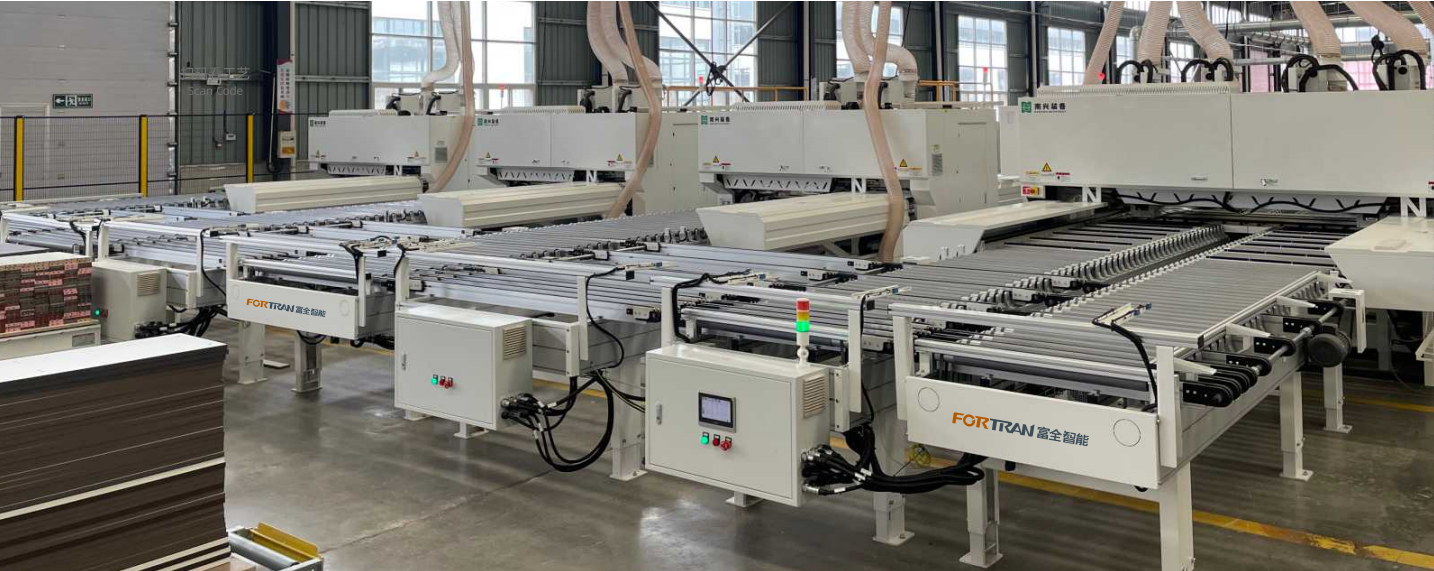
Many furniture factories still rely on manual transport or semi-automated workflows. While this may seem cost-effective initially, it creates long-term inefficiencies:
High labor dependency and rising costs
Inconsistent production speed
Increased risk of panel damage
Poor coordination between machines
These issues become more severe as order volumes increase. Without a reliable automatic conveyor system, even advanced machines cannot reach their full potential.
How an Automatic Conveyor System Improves a Furniture Production Line
Integrating an automatic conveyor system into a furniture production line transforms the entire manufacturing process.
1. Continuous Material Flow
Materials move seamlessly from one station to another without interruption, eliminating bottlenecks.
2. Reduced Labor Costs
Fewer workers are needed for material handling, allowing factories to allocate labor more efficiently.
3. Improved Production Stability
Unlike manual operations, conveyor systems maintain consistent speed and rhythm.
4. Enhanced Product Protection
Panels are transported smoothly, reducing scratches and damage.
5. Scalable Production
As demand grows, the system can be expanded without major structural changes.
With solutions from Fortran Machinery, these benefits are achieved through customized system design tailored to each factory layout.
Key Components of an Automatic Conveyor System
A complete system includes multiple modules working together:
Roller conveyors for horizontal transport
Belt conveyors for continuous movement
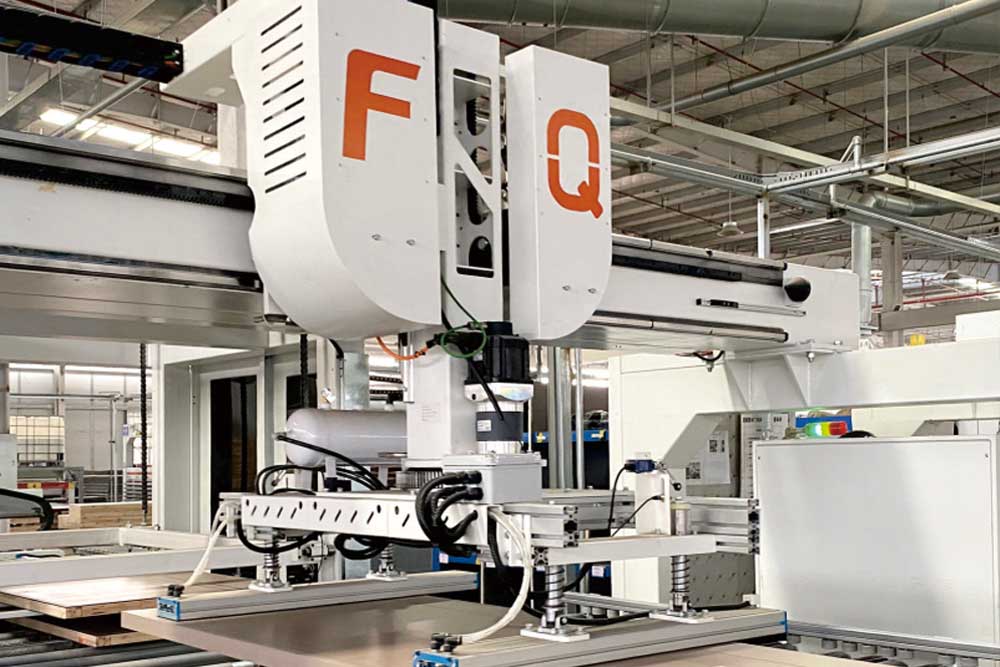
Lifting systems for vertical transfer
Turning devices for directional changes
Intelligent control systems for synchronization
Each component is designed to integrate seamlessly into the furniture production line, ensuring smooth and efficient operation.
Industry Performance Comparison
| Indicator | Manual Handling | Automatic Conveyor System |
|---|---|---|
| Labor Requirement | High | Reduced by 50–70% |
| Production Flow | Interrupted | Continuous |
| Product Damage Rate | 2–5% | <1% |
| Efficiency | Variable | Stable & High |
| Scalability | Limited | Flexible |
Factories that implement an automatic conveyor system typically see immediate improvements in both efficiency and cost control.
Why Choose Fortran Machinery?
As a technology company combining mechanical structure design with software development, Fortran Machinery provides more than just equipment—we deliver complete automation solutions.
Our strengths include:
Customized system design based on real factory conditions
Integration with existing production equipment
High-performance conveyor and lifting systems
Reliable after-sales support
By working closely with clients, Fortran Machinery ensures that each automatic conveyor system maximizes efficiency and long-term value.
Frequently Asked Questions (FAQ)
Q1: Is an automatic conveyor system suitable for small factories?
Yes. Systems can be designed modularly to match different production scales.
Q2: How long does it take to see ROI?
Most factories achieve return on investment within 6–12 months.
Q3: Can the system integrate with existing machines?
Absolutely. Solutions from Fortran Machinery are designed for seamless integration.
Q4: Does it require complex maintenance?
No. Modern conveyor systems are built for durability and easy operation.
Call to Action
If your factory is facing rising labor costs or inefficient workflows, now is the time to upgrade.
Fortran Machinery offers customized automatic conveyor system solutions designed to optimize your entire furniture production line.
👉 Visit www.fortrancn.com to request a free consultation and discover how automation can transform your production.
Conclusion
An automatic conveyor system is no longer just a supporting tool—it is the backbone of modern furniture manufacturing. By enabling continuous material flow, reducing labor costs, and improving production stability, it helps factories stay competitive in a rapidly evolving market.
With expertise in both engineering and automation, Fortran Machinery is ready to support your transition toward smarter, more efficient manufacturing.
