

In recent years, the global furniture manufacturing industry has reached a critical turning point. As consumer demand shifts toward personalization, rapid delivery, and stable product quality, factories are under pressure to transform. Traditional drawer assembly lines—long dependent on manual labor—are struggling with rising labor costs, inconsistent production output, and the shortage of experienced technicians. Against this backdrop, the introduction of the Automatic Drawer Assembly Machine marks the beginning of a new chapter for Smart Furniture Manufacturing.
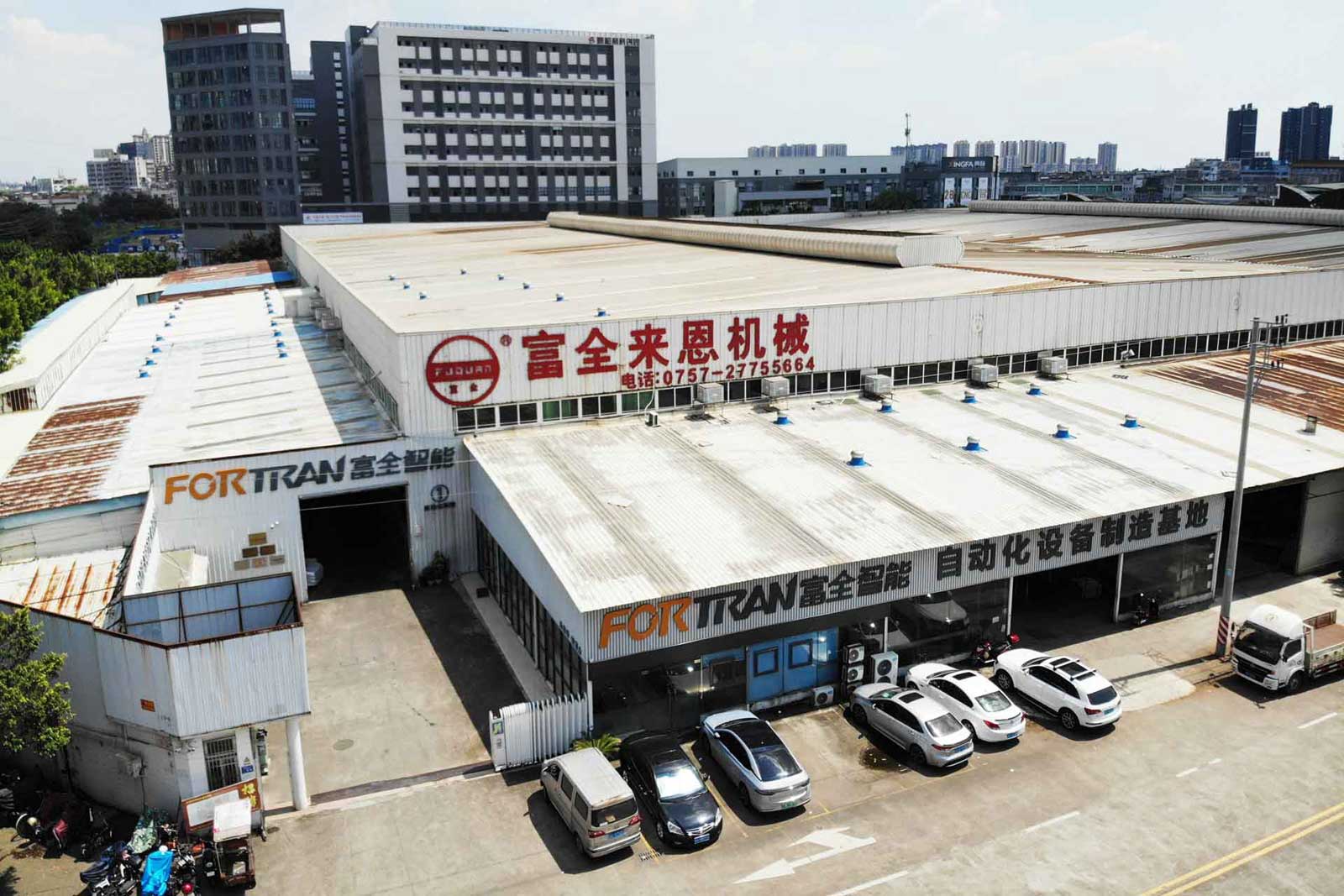
FORTRAN, a technology company recognized for balancing mechanical structure innovation with advanced software development, has emerged as a leader in domestic automation. With a strong R&D foundation and large-scale manufacturing capabilities, the company provides a comprehensive portfolio that includes automatic loading systems, conveyor lines, elevators, paper cutters, case sealers, and box folding machines. More importantly, FORTRAN delivers complete customized automation solutions tailored to on-site production environments, ensuring customers achieve the highest efficiency and real measurable ROI.
1. Industry Pain Points: Why Traditional Drawer Assembly Is Losing Its Competitiveness
For decades, drawer assembly has relied on human skill—skilled workers aligning components, applying glue, pressing structures, and ensuring squareness. But today, the challenges are clearer than ever:
• Heavy dependence on experienced labor
As older technicians retire, factories face a widening talent gap. New workers require weeks or months of training, and consistency remains a challenge.
• Low output limits production expansion
Manual drawer assembly often caps production at 80–120 units per worker per shift. For factories handling large-scale orders, this becomes a major bottleneck.
• Quality inconsistency and high rejection rates
Even highly experienced workers may produce drawers with small deviations. These small errors accumulate and affect cabinet fitment, causing rework and customer complaints.
• Rising labor costs and increasing HR pressure
From recruitment to training to management, the labor cost curve only rises year by year.
These issues underline the urgent need for Drawer Assembly Automation, which the new generation of equipment is finally capable of delivering.
2. Technology Innovations Behind the New Intelligent Solution
The Automatic Drawer Assembly Machine combines robotics, vision systems, and smart feeding technologies to reinvent the production process. It is the core engine powering next-generation Smart Furniture Manufacturing.
• Six-Axis Robotic Drawer Production System for Precise Assembly
The integrated Robotic Drawer Production System performs high-precision grabbing, positioning, and pressing. Its robotic arm ensures consistent accuracy across every drawer—something manual labor cannot reliably achieve.
• Vision-Guided Error Correction for Perfect Alignment
High-speed visual detection analyzes each component, correcting deviations instantly. This improves dimensional accuracy and significantly boosts the first-pass yield rate.
• Smart Feeding and Sorting for Continuous Output
Automated feeding, glue application, pressing, and output are synchronized in a closed-loop system. This eliminates idle time and ensures true Drawer Assembly Automation.
3. Production Efficiency Comparison & ROI Analysis
To understand the real performance gap, consider the typical productivity figures factories report after adopting FORTRAN’s Cabinet Production Equipment.
Production Parameter Comparison
| Parameter | Manual Drawer Assembly | Automatic Drawer Assembly Machine |
| Output per hour | 12–18 drawers | 60–90 drawers |
| First-pass yield | 85%–90% | 98%+ |
| Required labor | 3–5 workers | 0–1 operator |
| Scrap / rework rate | Medium | Extremely low |
| Annual labor cost | High | Minimal, mainly maintenance |
| Consistency | Varies by worker | Highly stable |
ROI Projection (Typical Scenario)
A mid-size factory producing 1,000 drawers/day reports:
Labor cost reduction: 65%–80%
Scrap reduction: 40%
Production increase: 3–4×
Payback period: 6–10 months
When paired with the Robotic Drawer Production System, many factories reach continuous 24/7 output with almost no human intervention.
4. Application Scenarios: Where This Technology Shines
• Mass Customization Production
For factories managing both large orders and multiple SKU variations, the system adapts quickly, maintaining the stability required for Smart Furniture Manufacturing.
• Small-Batch, Multi-Model Flex Production
Automatic changeovers allow quick tooling adjustments, supporting flexible orders without sacrificing speed.
• Seamless Integration with Existing Production Lines
As part of a complete Cabinet Production Equipment ecosystem, it connects effortlessly with conveyors, packaging systems, and robotic warehouses.
• High-Demand International Export Factories
Factories serving Europe and North America benefit from consistent quality and faster delivery cycles—giving them a competitive edge.
Through these applications, the Automatic Drawer Assembly Machine becomes more than an isolated device—it becomes the heart of a fully modernized Drawer Assembly Automation strategy.
FAQ
Q1: Can the Automatic Drawer Assembly Machine handle different drawer sizes?
Yes. The machine supports quick size adjustments and can be adapted to customized drawer specifications.
Q2: How complex is machine maintenance?
Basic daily checks are simple, and FORTRAN provides full training and remote technical support.
Q3: Can the machine integrate into an existing production line?
Absolutely. It is designed to fit into a wide range of Cabinet Production Equipment setups with minimal downtime.
Q4: What is the biggest advantage compared to manual production?
Consistency, output, labor elimination, and near-zero error rates—enabled by the Robotic Drawer Production System.
Q5: How soon can factories expect ROI?
Most customers reach payback within 6–10 months depending on production scale.
Conclusion: Zero-Labor Production Is No Longer the Future—It’s Here
The transformation of the furniture manufacturing industry will not be led by bigger factories or larger workforces, but by smarter systems. The rise of Automatic Drawer Assembly Machine technology signifies a shift toward high-efficiency, low-labor, intelligent production. With its seamless integration of robotics, vision systems, and automated feeding, it allows manufacturers to overcome labor shortages and operational bottlenecks once considered unavoidable.
For factories aiming to modernize, increase profitability, and stay competitive globally, embracing Drawer Assembly Automation and upgrading to advanced Cabinet Production Equipment is no longer optional—it is the strategic path forward for every forward-thinking manufacturer.
Ready to upgrade your production line?
FORTRAN’s team offers on-site evaluation, customized solutions, and turnkey integration services.
Say hello to the new standard of Smart Furniture Manufacturing—where precision, automation, and productivity work in perfect harmony.
