

In the panel furniture industry, the packaging stage is often underestimated. Many factories invest heavily in CNC machining centers, drilling equipment, and edge banding machines, yet overlook the final step that determines delivery speed, labor cost, and product protection: packaging.
For furniture manufacturers facing rising labor expenses, tighter delivery schedules, and increasing product customization, upgrading the packaging system has become one of the most effective ways to achieve structural efficiency improvement. Implementing a Panel Automatic Packaging Line is no longer just a modernization effort—it is a strategic decision that can transform the overall productivity of a panel furniture production line.
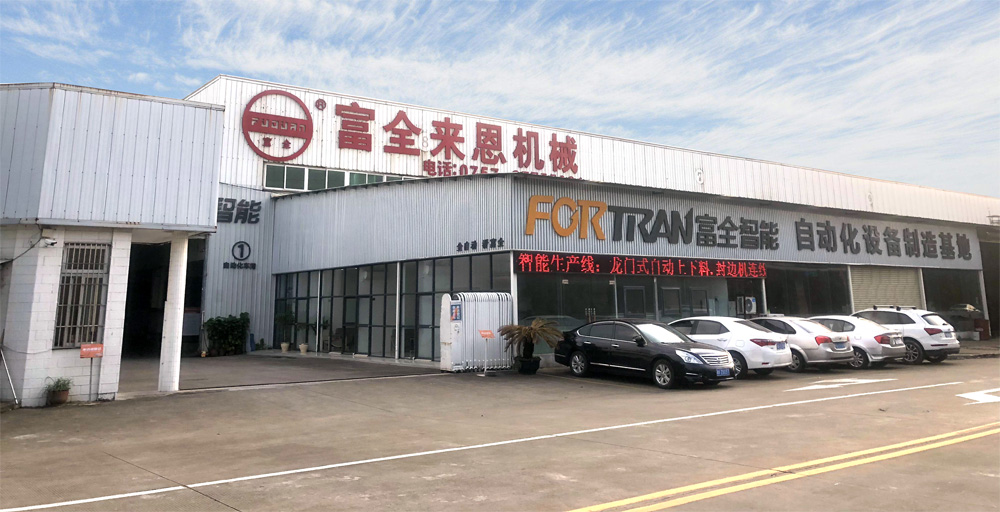
FORTRAN, a technology company integrating mechanical structure engineering with software development, specializes in building intelligent automation solutions tailored to real factory conditions. By combining conveyors, elevators, carton forming systems, and sealing machines, FORTRAN helps manufacturers build a Complete panel packaging production line that reduces operational costs while stabilizing output quality.
Why Packaging Becomes the Hidden Bottleneck
In a traditional panel furniture production line, packaging relies heavily on manual labor. Workers must sort panels, assemble cartons, stack products, and seal boxes. This process introduces several inefficiencies:
Inconsistent packaging speed
High labor dependency
Product damage during handling
Difficulty maintaining stable throughput
When production increases, packaging becomes the slowest stage in the panel furniture production line, limiting overall output.
By introducing a Panel Automatic Packaging Line, factories can synchronize packaging speed with upstream manufacturing processes. Instead of relying on manual coordination, a Complete panel packaging production line ensures consistent rhythm and accurate product handling.
The Core Structure of an Automated Packaging Line
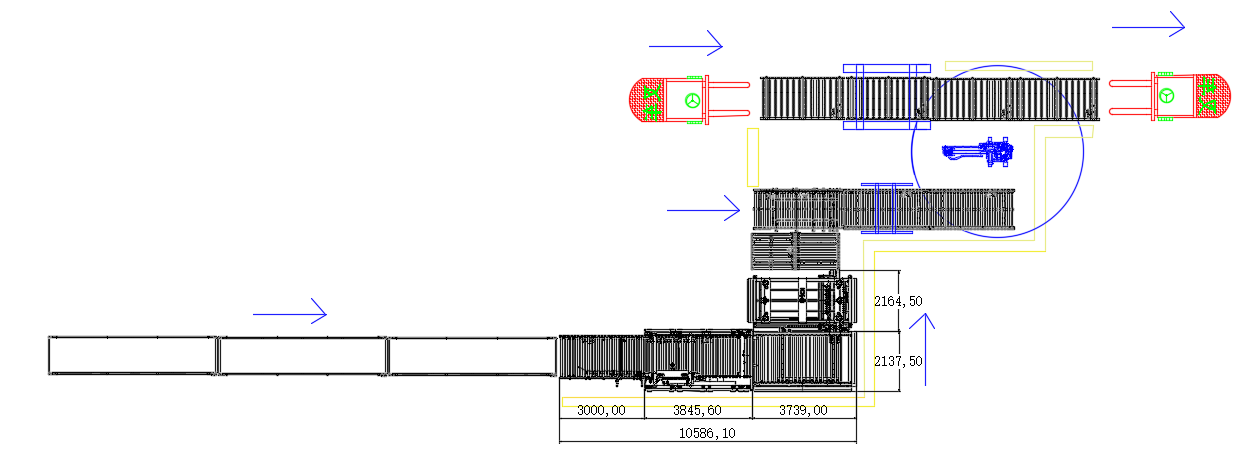
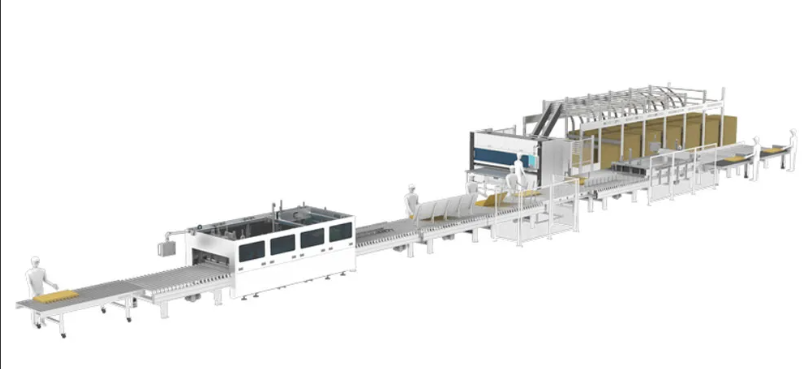
A modern Panel Automatic Packaging Line is not a single machine but a coordinated system of automation modules working together. These modules typically include:
Automatic conveying systems
Panel sorting and positioning units
Carton forming machines
Case sealing equipment
Palletizing or stacking modules
When integrated properly, these elements form a Complete panel packaging production line capable of handling continuous panel flow from the panel furniture production line without interruption.
This integrated approach ensures that packaging keeps pace with production rather than slowing it down.
Key Advantages of Automation in Packaging
1. Labor Cost Reduction
Labor accounts for a large portion of packaging expenses. A well-designed Panel Automatic Packaging Line can replace multiple manual operators while maintaining consistent performance.
In many factories, implementing a Complete panel packaging production line reduces labor requirements by more than half.
2. Improved Production Stability
Human-based packaging introduces fluctuations in speed and accuracy. Automated systems ensure every panel is handled consistently.
A synchronized Panel Automatic Packaging Line keeps the packaging stage aligned with the panel furniture production line, ensuring uninterrupted production flow.
3. Enhanced Product Protection
Furniture panels often feature delicate finishes. Excessive manual handling increases the risk of scratches or edge damage.
With a Complete panel packaging production line, panels move smoothly along conveyors and controlled mechanisms, minimizing unnecessary contact.
4. Scalability for Future Production
As order volumes grow, manual packaging becomes increasingly difficult to manage. Automation allows factories to expand production without dramatically increasing labor.
A modular Panel Automatic Packaging Line can be upgraded or extended as the panel furniture production line grows.
Industry Performance Comparison
| Indicator | Manual Packaging | Automated Packaging System |
| Labor Requirement | High | Reduced by 50–70% |
| Packaging Speed | Inconsistent | Stable |
| Product Damage Rate | 2–4% | <0.5% |
| Production Coordination | Difficult | Fully synchronized |
| Expansion Capability | Limited | Modular |
Factories adopting a Panel Automatic Packaging Line typically experience immediate efficiency improvements throughout the panel furniture production line.
How FORTRAN Designs Packaging Automation
Unlike standardized equipment suppliers, FORTRAN approaches every project as a customized engineering solution. The company analyzes the specific conditions of each panel furniture production line, including:
Factory layout
Panel dimensions
Production rhythm
Packaging requirements
Based on this analysis, engineers design a Complete panel packaging production line that integrates seamlessly with upstream manufacturing processes.
The goal is not only automation but also operational harmony between production and packaging.
Integration with Smart Manufacturing
Automation does not end at packaging. In advanced factories, the Panel Automatic Packaging Line becomes part of a broader intelligent production ecosystem.
Data from packaging equipment can be integrated into factory management systems, allowing real-time monitoring of throughput, order progress, and packaging efficiency.
Within a digitalized panel furniture production line, this data-driven approach improves planning accuracy and reduces operational uncertainty.
Frequently Asked Questions (FAQ)
Q1: Is packaging automation suitable for medium-sized factories?
Yes. A modular Panel Automatic Packaging Line can be scaled according to production capacity.
Q2: How quickly can automation improve efficiency?
Most factories observe measurable improvements within months after installing a Complete panel packaging production line.
Q3: Can packaging systems integrate with existing production lines?
Absolutely. A well-designed Panel Automatic Packaging Line can connect seamlessly to an existing panel furniture production line.
Q4: Does automation require large factory space?
Not necessarily. Many Complete panel packaging production line configurations are designed specifically for compact layouts.
Why Furniture Manufacturers Choose FORTRAN
FORTRAN combines strong mechanical engineering expertise with intelligent software development. Instead of simply supplying machines, the company provides fully integrated automation systems designed around real production environments.
By delivering a customized Panel Automatic Packaging Line, FORTRAN enables manufacturers to transform the final stage of production into a stable, high-efficiency process.
Each Complete panel packaging production line reflects years of industry experience and deep understanding of the operational needs of a modern panel furniture production line.
Call to Action
If packaging has become the bottleneck in your factory, now is the time to rethink your production strategy.
Upgrading to a Panel Automatic Packaging Line can significantly reduce labor costs, stabilize throughput, and protect product quality. FORTRAN offers tailored automation solutions designed specifically for your panel furniture production line.
Conclusion
In the modern furniture industry, competitiveness depends on more than machining speed. True efficiency requires every stage of the panel furniture production line to operate in harmony—including packaging.
By implementing a Panel Automatic Packaging Line, manufacturers can reduce labor dependency, improve product protection, and ensure stable production output. A well-designed Complete panel packaging production line is not simply an equipment upgrade—it is a structural transformation that prepares factories for future growth.
With its combination of engineering expertise and intelligent automation solutions, FORTRAN continues to help furniture manufacturers move toward smarter, more efficient production systems.
