

When manufacturers consider upgrading to automation, one question always comes first:
“How much does an automated furniture production line cost—and how fast can it pay back?”
This is not just a cost question. It is a profitability decision.
With rising labor costs and increasing demand for efficiency, investing in an automated furniture production line has become a strategic move for factories worldwide. As a professional automation provider, Fortran Machinery helps manufacturers turn automation from a capital expense into a long-term profit engine.
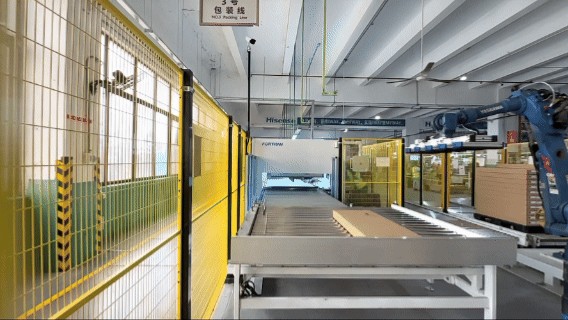
What Determines the Cost of an Automated Furniture Production Line?
The cost of an automated furniture production line varies depending on several key factors:
1. Production Capacity Requirements
Higher output demands require more advanced systems, increasing total investment.
2. Level of Automation
A semi-automated line costs less than a fully integrated intelligent factory furniture production line.
3. Equipment Configuration
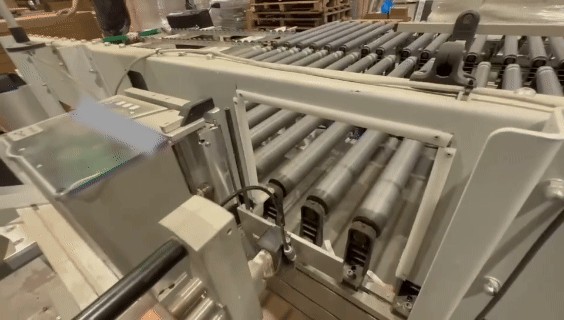
Typical systems may include:
automatic conveyor systems
loading and unloading machines
CNC processing equipment
automatic packaging systems
4. Customization Needs
Each factory layout is different. Customized solutions from Fortran Machinery ensure maximum efficiency but may affect initial cost.
Average Cost Range (Industry Reference)
| Production Type | Estimated Investment |
|---|---|
| Semi-Automatic Line | $50,000 – $150,000 |
| Standard Automated Line | $150,000 – $500,000 |
| Fully Intelligent Production Line | $500,000+ |
While the upfront investment may seem high, the real value lies in long-term returns.
ROI Model – How Automation Generates Profit
A proper ROI analysis should consider four key areas:
1. Labor Cost Savings
A traditional production line may require 10–20 workers for material handling and coordination.
By implementing an automated furniture production line, factories can reduce labor needs by 50–80%.
👉 Example:
Labor cost per worker: $800/month
Workers reduced: 10
Annual savings: $96,000
2. Efficiency Improvement
Automation significantly increases throughput.
👉 Example:
Manual output: 200 units/day
Automated output: 320 units/day
Increase: 60% productivity gain
This allows factories to take on more orders without expanding workforce.
3. Quality Cost Reduction
Manual operations often result in:
Rework
Material waste
Customer complaints
An intelligent factory furniture production line ensures consistent precision, reducing defect rates to below 1%.
4. Hidden Management Benefits
Automation also reduces:
Production coordination complexity
Worker training costs
Workplace safety risks
With solutions from Fortran Machinery, factories gain both operational and managerial efficiency.
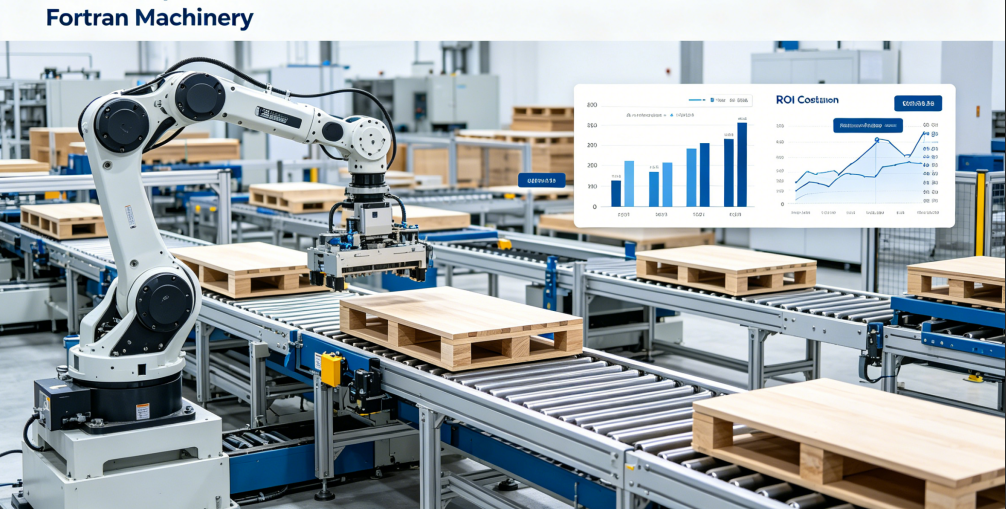
ROI Calculation Example
| Metric | Before Automation | After Automation |
|---|---|---|
| Workers | 15 | 6 |
| Daily Output | 200 units | 320 units |
| Defect Rate | 5% | <1% |
| Monthly Labor Cost | $12,000 | $4,800 |
👉 Estimated Payback Period: 6–12 months
This demonstrates how an automated furniture production line can quickly recover its investment.
Why Automation is a Long-Term Strategy
Beyond ROI, automation provides long-term competitive advantages:
Ability to handle large-scale orders
Consistent product quality
Faster delivery times
Stronger brand reputation
Manufacturers that invest early in automation solutions for furniture manufacturing gain a significant edge in the market.
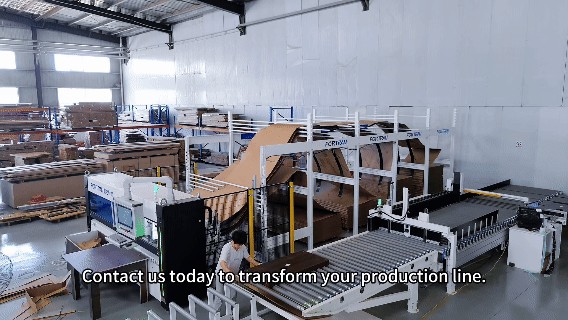
Why Choose Fortran Machinery?
Fortran Machinery is more than an equipment supplier—we are a complete automation solution provider.
Our strengths include:
Integration of mechanical design and software systems
Scalable solutions for future expansion
Proven experience in factory automation
By partnering with Fortran Machinery, manufacturers can ensure maximum ROI and long-term success.
Long-Tail Keywords for SEO Ranking
This article targets high-conversion search terms such as:
how much does furniture production line cost
automated furniture production line price
ROI of factory automation
cost of intelligent furniture factory
reduce labor cost in furniture manufacturing
These keywords attract decision-makers ready to invest.
FAQ – Cost & ROI Questions
Q1: Is automation too expensive for small factories?
No. Modular solutions allow gradual investment based on budget.
Q2: How fast can ROI be achieved?
Most factories recover costs within 6–12 months.
Q3: Can I upgrade step by step?
Yes. Fortran Machinery offers scalable solutions.
Q4: What is the biggest ROI driver?
Labor savings and efficiency improvement.
Call to Action – Get Your ROI Calculation
If you are considering upgrading your factory, the best step is to calculate your real ROI.
Fortran Machinery offers customized automation solutions and free ROI analysis based on your production data.
👉 Visit www.fortrancn.com to request a personalized quotation and ROI report.
Conclusion
The cost of an automated furniture production line is not an expense—it is an investment in efficiency, quality, and long-term growth.
With the right solution, manufacturers can reduce labor costs, increase production capacity, and achieve rapid ROI.
With strong technical expertise and customized solutions, Fortran Machinery helps factories turn automation into a powerful competitive advantage.
