

The year is 2026. A food manufacturer's production line hums, seamlessly switching from packing artisanal, small-batch granola into bespoke cardboard boxes to running high-volume cereal packs—all within a single shift. In an adjacent industrial park, a furniture workshop receives a live order for a customized cabinet; the automated cutting and folding cell instantly downloads the specs and begins production without manual retooling. This is not a glimpse of a distant future. It is the operational reality being built today by manufacturers who recognize a pivotal shift: the era of monolithic, single-purpose automation is over. The winning question for 2026 is no longer "How fast can we make one thing?" but "How agilely can we make many things?" The answer lies in a new breed of 2026 flexible automation solution that is inherently adaptive, intelligent, and custom-built for variety.
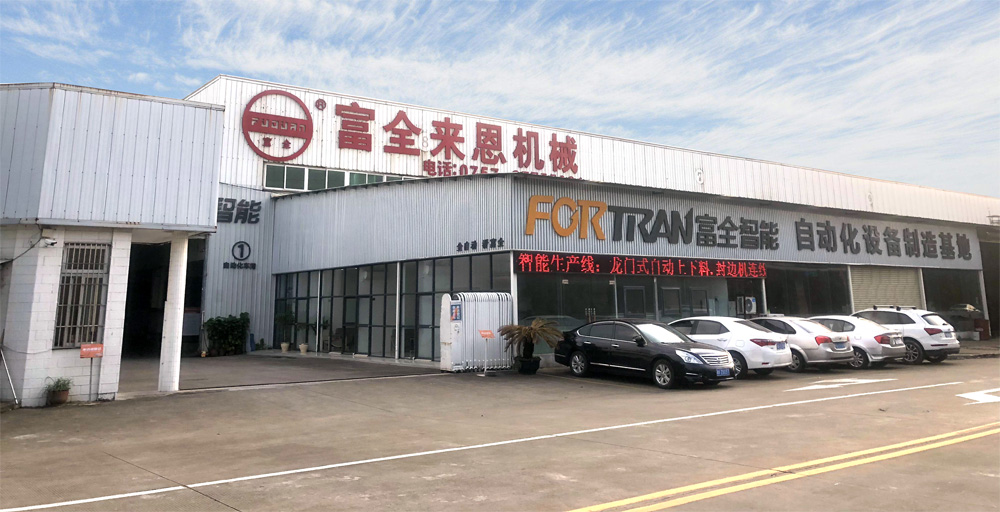
At the forefront of this revolution is FORTRAN, a technology pioneer whose very DNA is engineered for this transition. By masterfully balancing deep mechanical design prowess with agile software development, FORTRAN doesn't just sell machines; it architects adaptive production ecosystems. As a leading customized automation equipment supplier, the company is answering the industry's call for systems that thrive on change, not just tolerate it.
The 2026 Imperative: From Scale to Agility
Global supply chain shocks, hyper-personalized consumer demand, and the economic necessity of just-in-time production have converged to make flexibility the paramount competitive metric. Traditional, hardwired modular production line concepts, while an improvement, often fall short. They can be slow to reconfigure, expensive to modify, and create "islands of automation" that lack the intelligence to communicate and adapt dynamically.
The pain points for procurement managers and plant directors are acute:
Lost Revenue During Changeovers: Hours of downtime switching product lines.
Capital Lock-in: Expensive, dedicated machines sit idle during demand shifts.
Inability to Capture Niche Markets: Lack of agility to profitably fulfill small, custom orders.
Skills Gap Strain: Complex manual changeovers require highly trained technicians.
FORTRAN’s approach tackles these head-on by focusing on the heart of the matter: true customizability. It's about providing custom packaging automation equipment—like case sealers, box erectors, and paper cutters—that are born flexible. Their systems are designed from the ground up to be reconfigured, both physically and digitally, for the product mix of today and the unknown demands of tomorrow.
The FORTRAN Difference: Where Custom Hardware Meets Intelligent Control
The magic of a FORTRAN 2026 flexible automation solution is not in a single component but in a powerful synergy. It’s the fusion of mechanically versatile hardware with brains that learn and adapt.
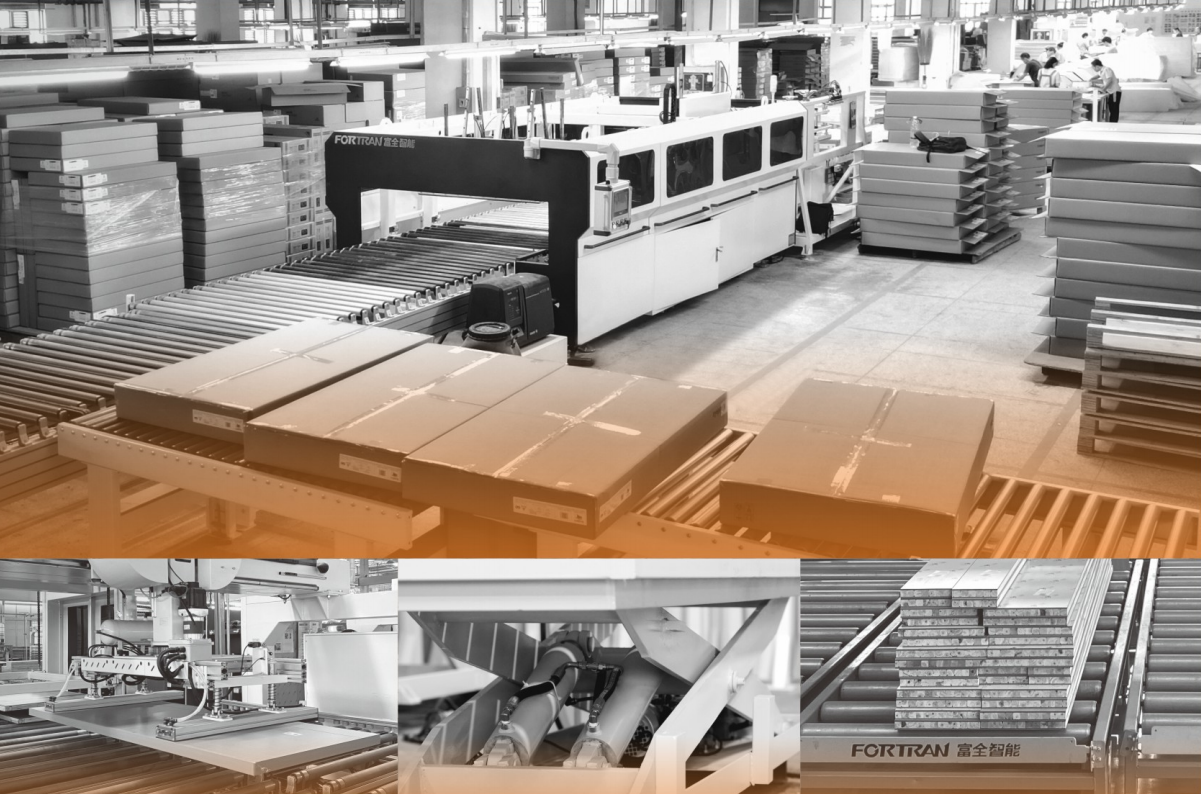
Modular by Design, Agile by Nature: FORTRAN redefines the modular production line. Instead of fixed stations loosely linked, they engineer systems with true plug-and-play functionality. A custom packaging automation equipment cell might feature quick-change tooling heads on a robotic arm, adjustable-width conveyor sections, and swappable forming mandrels on a box folder. This physical modularity allows the line's geometry and function to be altered in hours, not days.
The Intelligence Layer: The Applications of FORTRAN in Automation Control: This is the system's nervous system. FORTRAN’s proprietary control software, embedded with adaptive algorithms, is what transforms modular hardware into an intelligent organism. When a new product SKU is loaded into the system, the software doesn't just run a new program. It can automatically:
Adjust machine parameters (pressure, cut length, fold angle).
Guide robotic arms to new pick-and-place points.
Re-route product flow through different pathways on the modular production line.
Perform self-diagnostics to ensure the new setup is within tolerance. The result? Changeover times slashed to under 10 minutes, a figure that dismantles the traditional economic barrier to small-batch production.
Full-Cycle Partnership: As a true customized automation equipment supplier, FORTRAN’s engagement begins long before a machine is built. It starts with a collaborative deep-dive into the client's unique workflow, pain points, and future product roadmap. This allows them to engineer a solution that fits not just the current floor space and output needs, but is also pre-adapted for foreseeable evolution. This end-to-end service—from feasibility study and process mapping to installation, training, and remote support—ensures the solution delivers maximum operational benefit.
The Adaptive Toolkit: FORTRAN’s Key Solutions for 2026
FORTRAN’s portfolio is a toolkit for building resilience. Key systems are being re-engineered for this new paradigm:
Smart Case Sealers & Box Folders: Beyond adjusting box sizes, these units can now read RFID tags or vision-system data to select the correct adhesive pattern, flap sequence, or even reinforcement needed for a specific product, all managed by the central applications of FORTRAN in automation control.
Adaptive Paper & Material Cutters: Equipped with advanced servo control and FORTRAN’s software, these cutters can switch cutting patterns on-the-fly, handle irregular sheet sizes from a shared buffer, and optimize material yield for mixed batches, reducing waste significantly.
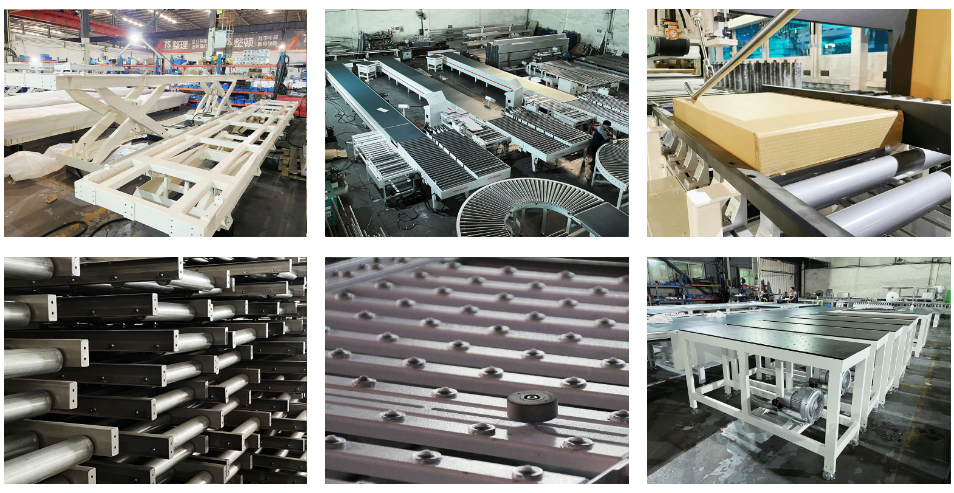
Reconfigurable Conveyor & Handling Systems: The backbone of any modular production line, these systems feature diverters, lifts, and accumulating buffers that can be reprogrammed to create dynamic flow paths for different products, ensuring smooth transit through varying process steps.
Quantifying Flexibility: The 2026 Production Model
The impact of transitioning to a FORTRAN-engineered adaptive system is measurable and profound.
ROI & Performance Analysis: Traditional vs. FORTRAN 2026 Flexible Automation
| Performance Metric | Traditional Fixed Automation Line | FORTRAN-Powered Adaptive Line | 2026 Advantage |
| Typical Changeover Time | 90 - 240 minutes (Manual tooling, recalibration) | < 10 minutes (Automated, software-driven) | Up to 95% Reduction |
| Minimum Economical Batch Size | 5,000 - 10,000 units | 500 - 1,000 units | Serve niche & custom markets |
| Overall Equipment Effectiveness (OEE) | 60-70% (High downtime penalty) | 85%+ (Minimal changeover loss) | >15% Absolute Gain |
| Reconfiguration for New Product | Major CapEx project, weeks/months | Modular swap/software update, days | Future-proofs capital investment |
| Operator Skill Requirement | High (Technical mechanics) | Medium (Interface-guided procedures) | Reduces skills gap pressure |
| Return on Investment (ROI) Horizon | 24-36 months (Based on single product) | 12-18 months (Driven by multi-product utility) | Faster value realization |
FAQ: Addressing the Core Questions on the Path to 2026
Q1: Is a "flexible" system a compromise on speed or durability for high-volume runs?
A: Absolutely not. FORTRAN’s 2026 flexible automation solution is engineered for peak performance across all regimes. The robustness of our custom packaging automation equipment ensures it can sustain high-speed, high-volume production. The flexibility comes from intelligent control and modular design, not from a reduction in build quality. You gain agility without sacrificing pace.
Q2: How deep does the customization go? Can you truly match our unique, complex process?
A: This is the core of our mission as a customized automation equipment supplier. We don't start with a catalog. We start with your process flowchart. Whether it’s a unique sealing method, a delicate handling requirement for electronics, or a specific sequencing of folds for furniture packaging, our engineering team designs the mechanical fixtures and writes the control logic to make your exact vision work—reliably and efficiently.
Q3: We have existing machinery. Can FORTRAN's adaptive control system integrate with it?
A: Yes, a key part of the applications of FORTRAN in automation control is superior interoperability. Our control platform is designed to act as a unifying "brain," communicating with legacy PLCs, robots, and sensors via standard industrial protocols. We can often modernize and add flexibility to your existing modular production line assets, protecting prior investments.
Q4: What about software updates and long-term support for these complex systems?
A: FORTRAN views the software as a living part of the system. We provide regular updates to our control algorithms and HMI interfaces. Our support includes remote diagnostics and virtual assistance, ensuring your adaptive line continues to evolve and perform. As your customized automation equipment supplier, we are committed to a long-term partnership.
Q5: How does this approach impact workforce management and training?
A: It empowers your workforce. By automating complex changeovers and parameter settings, the system reduces human error and lowers the technical barrier for line operators. Staff are upskilled to manage a more dynamic production schedule and analyze performance data, moving from manual laborers to production supervisors and problem-solvers.
Q6: Is rapid delivery possible for highly custom solutions?
A: FORTRAN’s large production scale and standardized modular component library are key here. While each solution is custom-configured, we build it using pre-engineered, quality-assured modules. This allows us to offer significantly faster delivery times for custom packaging automation equipment compared to a pure one-off build, without compromising on the tailored fit.
A Call to Action: Architect Your 2026 Factory Today
The transition to flexible production is not a future event—it is a present-day strategic decision. The companies that will lead in 2026 are those that invest in the adaptive infrastructure today. Waiting until demand forces a chaotic scramble is a recipe for lost market share and eroded margins.
Stop asking if your line can handle the next product. Start building a line that welcomes it.
Partner with FORTRAN to design your 2026 production reality.
Contact us for a comprehensive, no-obligation Flexible Production Readiness Assessment. Our engineers will work with you to map your current constraints, identify your highest-value flexibility opportunities, and provide a clear roadmap and ROI projection for a FORTRAN 2026 flexible automation solution tailored to your ambition.
Conclusion: The Future is Configurable
FORTRAN is not merely keeping pace with the trend toward flexibility; it is actively defining its engineering standards. By delivering true customized automation equipment that is both physically reconfigurable and intelligently adaptive, they are providing manufacturers with the ultimate competitive weapon: operational resilience.
The applications of FORTRAN in automation control turn abstract concepts like "agility" and "customization" into tangible, daily operational advantages—faster changeovers, smaller batches, and happier customers. In the dynamic manufacturing landscape of 2026 and beyond, the most valuable asset will be a production system that treats change not as a disruption, but as its primary directive. With FORTRAN, that future is configurable, and it is available now.
