

The Dawn of the Quick-Payback Era in Automation
Walk through any mid-sized manufacturing facility today, and you'll hear a familiar tension in conversations between plant managers and CFOs. On one side: the pressing need to automate—to combat labor shortages, meet soaring demand, and keep pace with competitors. On the other: the daunting specter of capital expenditure, long payback periods, and disruptive implementations. For years, the promise of automation was shadowed by a harsh financial reality: complex systems could take years to justify their cost. That era is over.
A new paradigm is emerging, led by forward-thinking integrators like FORTRAN, a company built on the powerful fusion of precision mechanical engineering and agile software development. They are proving that with the right approach, customized automation equipment supplier partnerships can deliver systems that don't just promise a return on investment, but guarantee a rapid and measurable one—often within 180 days. This isn't about selling robots; it's about engineering profitability.
At the heart of this revolution are deceptively simple yet profoundly impactful systems: automatic loading and unloading equipment and intelligently designed automatic conveyor line networks. When these are not merely installed but thoughtfully customized and integrated into a facility's unique workflow, they become engines of financial and operational transformation.
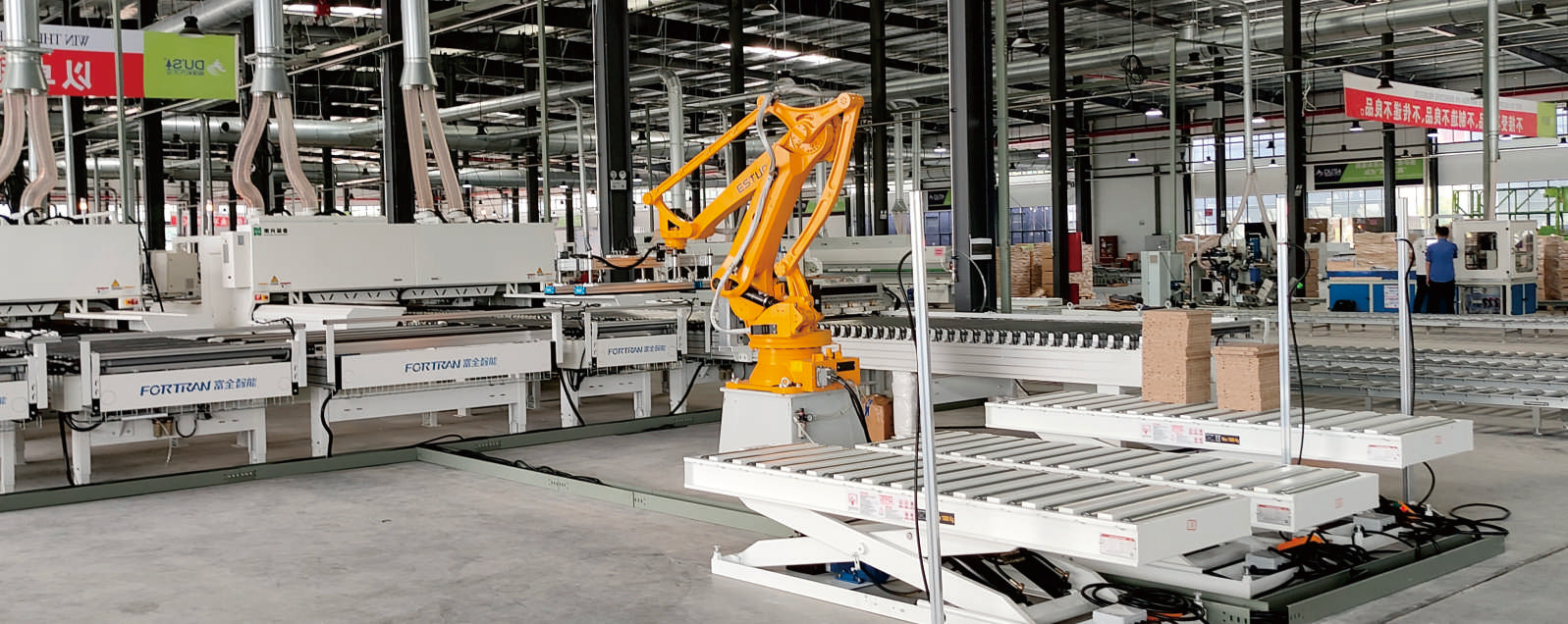
FORTRAN: The Architect of Customized, High-ROI Automation
To understand how a six-month ROI is achievable, one must first understand the FORTRAN difference. Unlike vendors who offer off-the-shelf solutions, FORTRAN operates as a true engineering partner. Their philosophy is rooted in a deep understanding that no two production floors are alike. A bottleneck in a packaging plant differs from one in a parts assembly facility; a labor-intensive process in material handling requires a different solution than one in final product inspection.
FORTRAN's expertise spans the critical junction where robust hardware meets intelligent control. Their team doesn't just design a machine; they architect a solution. They examine the specific pain points—be it the repetitive strain of manual loading at a CNC machine, the congestion and slowdowns in a warehouse pick line, or the inconsistencies in manual carton sealing. They then apply their core technologies—from versatile automatic loading arms to synchronized automatic conveyor line systems—as building blocks, customizing and programming them into a cohesive, purpose-built solution. This tailored approach is what turns a generic capital investment into a targeted, high-velocity return generator.
Deconstructing the 6-Month Payback: A Real-World Case Study
Consider "Precision Components Inc.," a real but anonymized manufacturer of specialized metal parts. Their challenge was a classic one: a cluster of three CNC machining centers were operating at only 65% efficiency. The reason? Operators were responsible for manually loading raw billets, unloading finished parts, and deburring—a cycle that kept the expensive machines idle for significant periods. Labor costs were high, throughput was capped, and overtime was routine to meet orders.
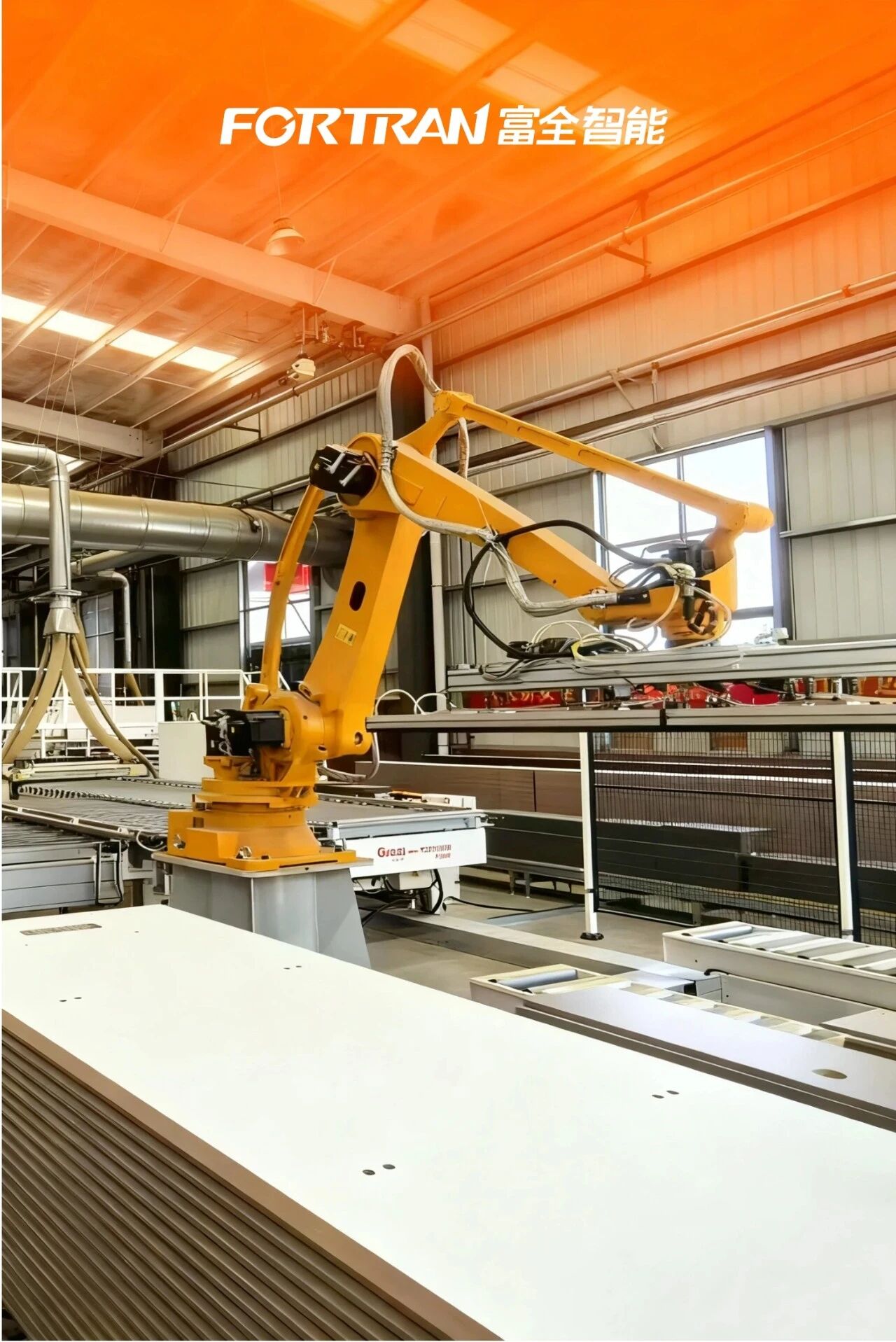
FORTRAN's analysis did not prescribe a full-scale, lights-out factory overhaul. Instead, they engineered a focused, elegant solution: a custom automatic loading and unloading equipment cell for the CNC cluster. The system featured a compact gantry robot equipped with dual grippers, a raw material rack, and a finished parts conveyor. Crucially, it was integrated with the machines' PLCs and FORTRAN's own control software.
The Results & The ROI Math:
The transformation was immediate and quantifiable:
Machine Utilization jumped from 65% to 92%, enabling nearly 10 extra hours of production per machine, per week.
Direct Labor on the cell was reduced from 3 shifts (3 employees) to 0.5 shifts (1 employee for oversight and quality checks).
Throughput increased by 35%, allowing the company to delay a planned capital expenditure on a fourth CNC machine.
Consistency & Quality improved, reducing scrap from handling errors by 2%.
The 6-Month Payback Calculation:
| Cost Savings & Revenue Gains | Monthly Impact | Annualized Impact |
| Labor Cost Reduction (2.5 FTE saved) | $12,500 | $150,000 |
| Overtime Cost Elimination | $3,500 | $42,000 |
| Throughput Increase Revenue (35% more saleable parts) | $28,000 | $336,000 |
| Scrap & Rework Reduction | $1,500 | $18,000 |
| Deferred Capex (Avoided 4th CNC purchase) | (One-time saving factored below) | $250,000 |
| Total FORTRAN System Investment | $398,000 | |
| Total Annual Financial Benefit (Recurring) | $45,500 | $546,000 |
With the one-time benefit of deferred capital expenditure factored in proportionally over the first year, the effective payback period falls well within 6 months.
This case underscores the power of the applications of FORTRAN in automation control. It wasn't just the robot that created value; it was the intelligent software that optimized the loading/unloading sequence, minimized machine idle time, and provided real-time production data—turning a cluster of standalone machines into a synchronized, high-output production unit.
The Pillars of Rapid ROI: More Than Just Hardware
Achieving such swift returns rests on several foundational principles that define FORTRAN's approach as a customized automation equipment supplier:
Targeted Problem-Solving, Not Blanket Automation: The focus is on automating the most labor-intensive, bottlenecked, or error-prone process step. This yields the highest immediate gain for the lowest incremental investment.
Seamless Integration is Key: Equipment must communicate flawlessly with existing machinery. FORTRAN's deep expertise in controls and software ensures their automatic conveyor line doesn't just move boxes; it receives signals from a printer-applicator, triggers a diverter, and signals the palletizer—all as one fluid system.
Design for Flexibility & Uptime: Customized doesn't mean fragile. Systems are built with modularity and ease of maintenance in mind, minimizing downtime and allowing for future reconfiguration as needs change.
Human-Machine Collaboration: The goal is to augment, not just replace. Well-designed automation frees skilled workers from repetitive tasks for higher-value roles in quality control, maintenance, or process improvement, boosting overall morale and operational intelligence.
Industry-Wide Impact: A Comparative Analysis
The benefits of this targeted automation strategy are universal across manufacturing segments. The following table illustrates the typical impact areas and ROI drivers for common FORTRAN solutions.
ROI Impact Analysis of Customized Automation Solutions
| Application Area | Typical FORTRAN Solution | Primary ROI Drivers | Typical Payback Range |
| Machine Tending | Automatic loading and unloading equipment for CNC, injection molding, stamping presses. | • Labor displacement (1-3 shifts) | 4-9 months |
| • 20-40% machine utilization increase | |||
| • Scrap reduction | |||
| • Enables lights-out shifts | |||
| Material Handling & Sorting | Intelligent automatic conveyor line systems with sortation, merging, and scanning. | • Throughput increase (25-50%) | 6-12 months |
| • Labor reduction in manual transport/sorting | |||
| • Error and mis-shipment reduction | |||
| • Space optimization | |||
| Packaging & Palletizing | Integrated systems with case erectors, sealers, and robotic palletizers. | • Line speed increase to match production | 8-14 months |
| • Elimination of packaging labor | |||
| • Reduction in material waste (glue, tape, film) | |||
| • Improved shipment safety & consistency | |||
| Process-Specific Assembly | Custom work cells for gluing, fastening, testing, or kitting. | • Elimination of manual process bottlenecks | 6-10 months |
| • 100% quality inspection via vision systems | |||
| • Precise, repeatable application (saving adhesive/fastener costs) | |||
| • Detailed production traceability |
These outcomes are made possible by the sophisticated applications of FORTRAN in automation control, which transform mechanical systems into data-aware, adaptive production assets.
Addressing the Core Concerns: Your ROI Questions Answered
Q1: Is a 6-month ROI realistic for my facility, or is it just a best-case scenario?
A: While the exact timeline depends on your specific process, cost structure, and output value, a sub-12-month ROI is a standard design target for FORTRAN. The 6-month benchmark is achieved by rigorously targeting the process with the highest labor cost, throughput constraint, or quality cost. We begin every project with a detailed Value Stream Map and ROI projection specific to your operation.
Q2: We have a unique process and older machinery. Can customized automation still work for us?
A: This is precisely where a customized automation equipment supplier like FORTRAN excels. Off-the-shelf solutions often fail in non-standard environments. Our engineers specialize in designing interfaces and control logic to integrate with legacy equipment, creating hybrid systems that modernize your existing capital investment rather than forcing you to replace it.
Q3: Won't automating a process just move the bottleneck somewhere else?
A: A competent system integrator always analyzes the entire workflow. Our focus is on balanced automation. We model the proposed solution to ensure it not only solves the immediate problem but elevates the capacity of the entire line. Often, implementing an automatic conveyor line or automatic loading station reveals and allows for the optimization of the next constraint.
Q4: What about the hidden costs—installation, programming, maintenance, training?
A: Transparency is key. FORTRAN's proposals include a fixed-price turnkey cost covering design, hardware, software, installation, commissioning, and on-site operator/maintainer training. We also offer clear, upfront maintenance plans. The rapid ROI calculations factor in all these costs against the full spectrum of savings and gains.
Q5: How does the software and control aspect contribute to the fast payback?
A: The applications of FORTRAN in automation control are where efficiency is captured. Smart controls minimize cycle times, prevent collisions, and optimize material flow. They also provide the data—OEE (Overall Equipment Effectiveness), downtime reasons, production counts—that allows managers to continuously improve, unlocking further savings long after installation.
Q6: What if our product or process needs to change in a year?
A: We build flexibility into our designs. Modular automatic loading and unloading equipment, programmable automatic conveyor line paths, and easily re-teachable robots are standard features. Your investment is protected because the system can evolve with your business.
A Call to Action: Stop Calculating Risk, Start Calculating Return
The question for today's manufacturing leader is no longer "Can we afford to automate?" but "Can we afford to wait?" While competitors hesitate, you have the opportunity to lock in a decisive advantage in cost, capacity, and resilience.
Don't let the legacy narrative of long, uncertain automation paybacks hold you back. The model has changed. A strategic partnership with a customized automation equipment supplier like FORTRAN, focused on your specific pain points and financial goals, can deliver a verified, rapid return.
Take the first step toward quantifying your own 6-month ROI.
Contact FORTRAN today to schedule a no-obligation, on-site or virtual production line assessment. Our engineers will identify your highest-potential automation opportunity and provide you with a detailed, data-backed projection of the financial and operational returns you can expect. Let's move beyond promise and into provable performance.
Conclusion: Redefining the Automation Investment
FORTRAN is at the forefront of a fundamental shift in industrial automation. By championing a philosophy of customization, integration, and tangible financial engineering, they have dismantled the old barrier of slow ROI. Their work proves that automation, when applied with surgical precision and deep technical expertise, is one of the fastest and most powerful levers a manufacturer can pull for immediate competitive gain.
The evidence is clear in the humming efficiency of a seamlessly loaded machining cell, the relentless flow of a smart conveyor system, and the bottom-line impact measured in months, not years. In the modern manufacturing landscape, the most prudent financial decision is often the most automated one. FORTRAN isn't just building equipment; they are building the compelling business case for the intelligent, agile, and highly profitable factory of the present.
